Bitter Gourd Resource Database

Bitter Gourd Resource Database Manual

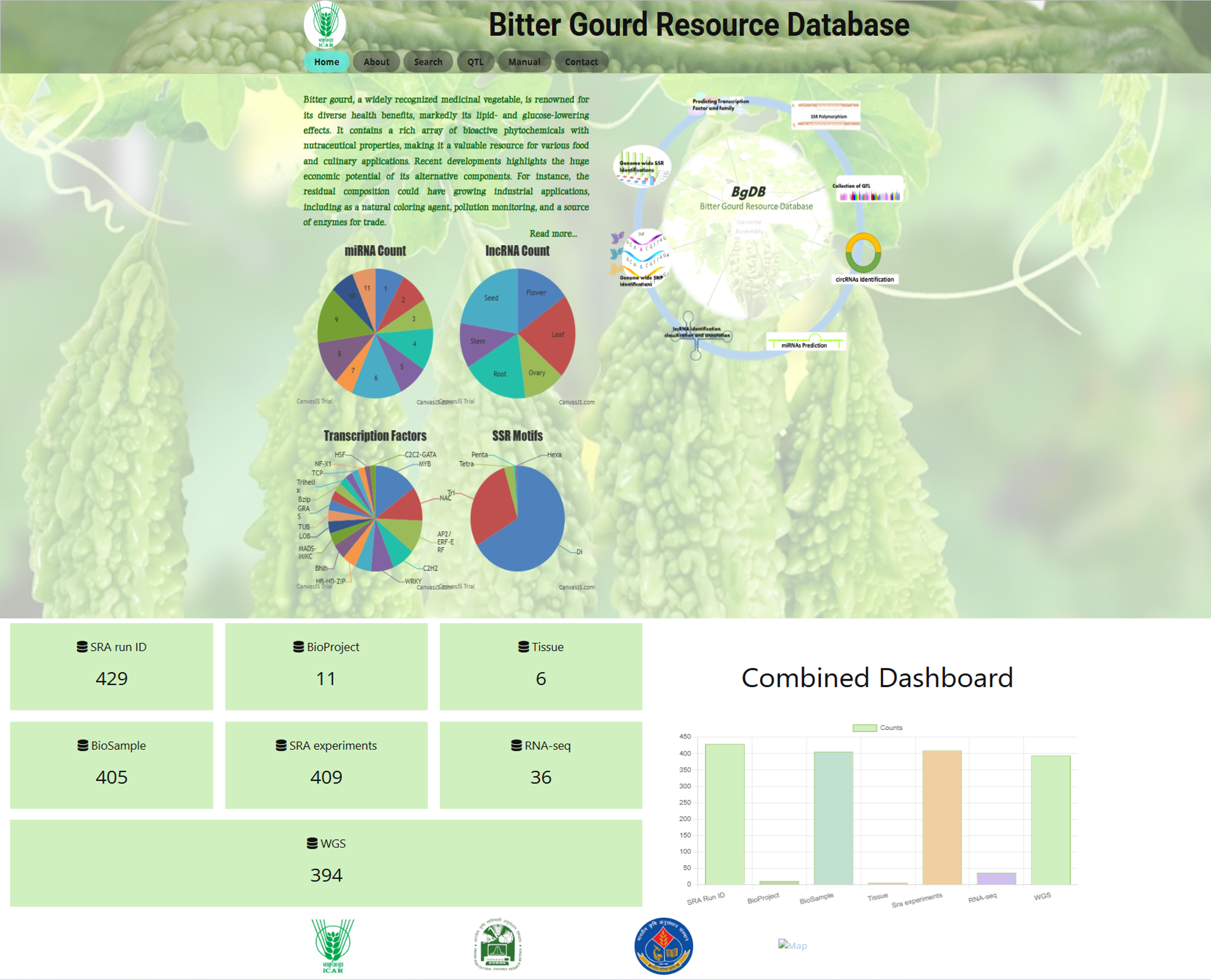
Fig.1 Homepage of the Bitter Gourd Resource Database
Homepage Image

The Homepage provides key sections for easy navigation:

  • About: Overview of bitter gourd's significance, history, and economic importance.
  • Search: Query genomic data, including Variants, Non-Coding RNA, Transcription Factors, and Transcripts. Users can refine results and download data.
  • QTL: Access quantitative trait loci data for traits like yield and disease resistance.
  • Contact: Find support details to reach database administrators.
  • Manual: Guides on using database features effectively.

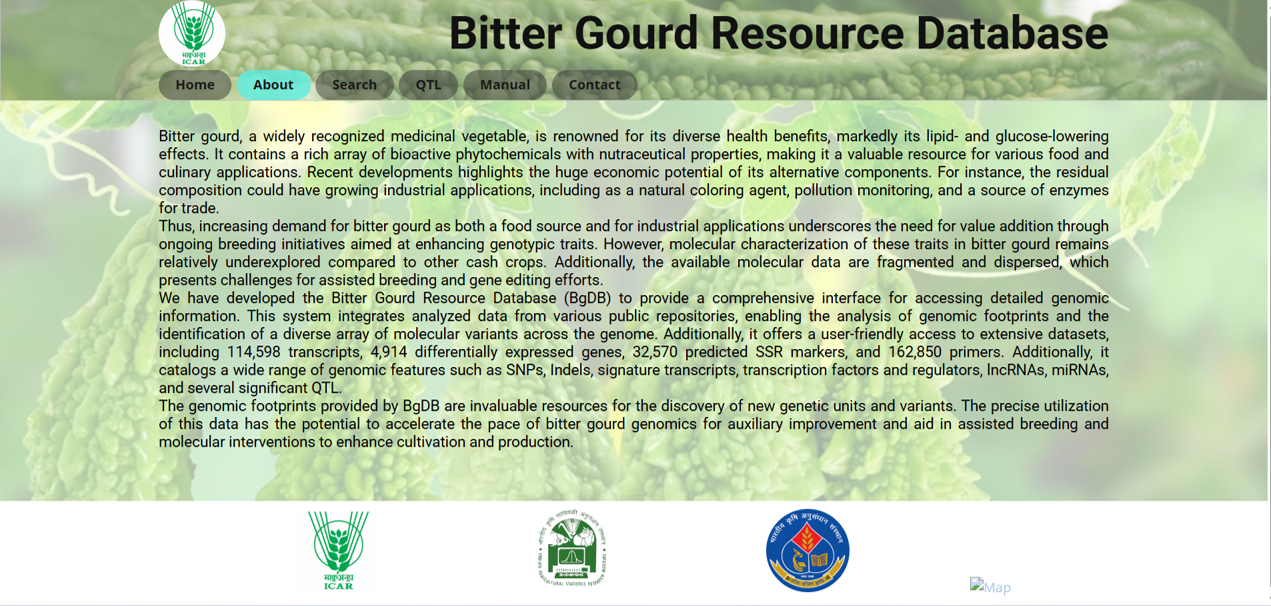
Fig.2 About Section of the Bitter Gourd Resource Database
About Section

The About section of the Bitter Gourd Resource Database provides an introduction to the database and its focus on bitter gourd (Momordica charantia L.), a significant vegetable crop in the Cucurbitaceae family.

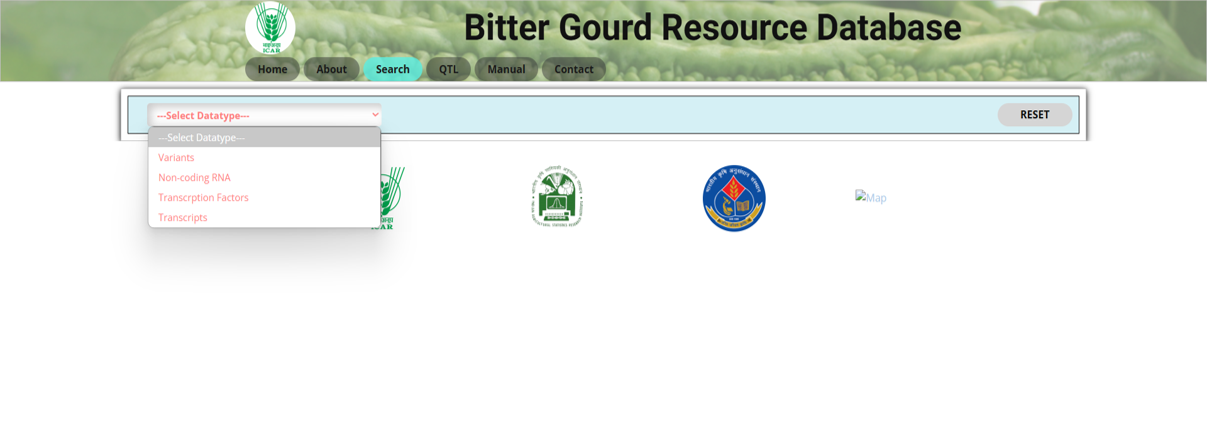
Fig.3 Search Section of the Bitter Gourd Resource Database
Search Section

The Search section of the Bitter Gourd Resource Database allows users to query and retrieve specific genomic data related to bitter gourd (Momordica charantia L.). This section is designed to be user-friendly and provides various options to filter and refine search results.
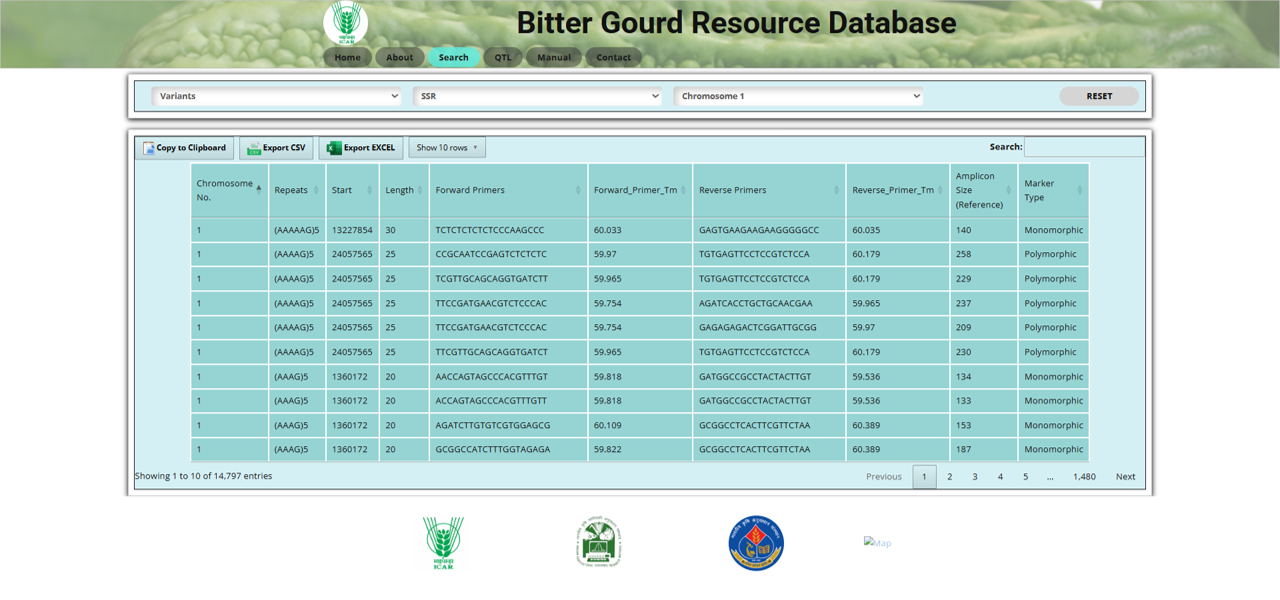
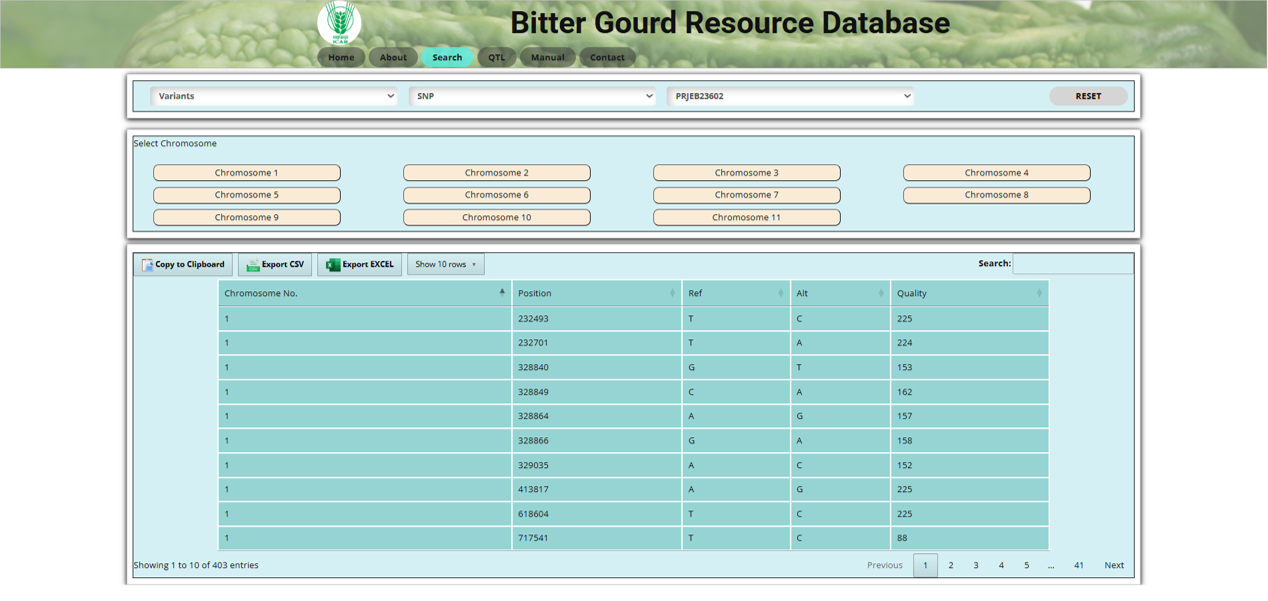
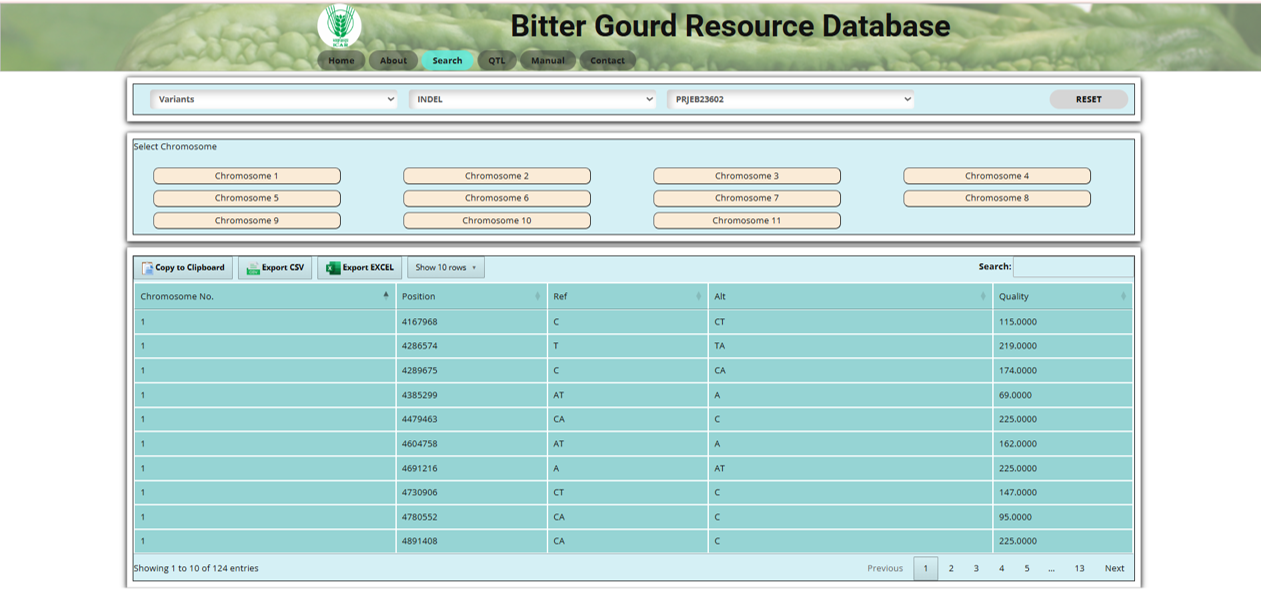
The Variant section in the Search tool allows users to explore genetic variations in bitter gourd. It includes three types:

  • SSR: Simple Sequence Repeats, used as genetic markers.
  • SNP: Single Nucleotide Polymorphisms, for studying genetic variations.
  • INDEL: Insertions/Deletions, useful for analyzing structural changes.

Fig.4 Variant Section of the Bitter Gourd Resource Database
Variant Section

Fig.5 SSR section of the Bitter Gourd Resource Database
SSR Section

Fig.6 SNP section of the Bitter Gourd Resource Database
SNP Section

Fig.7 INDEL section of the Bitter Gourd Resource Database
INDEL Section

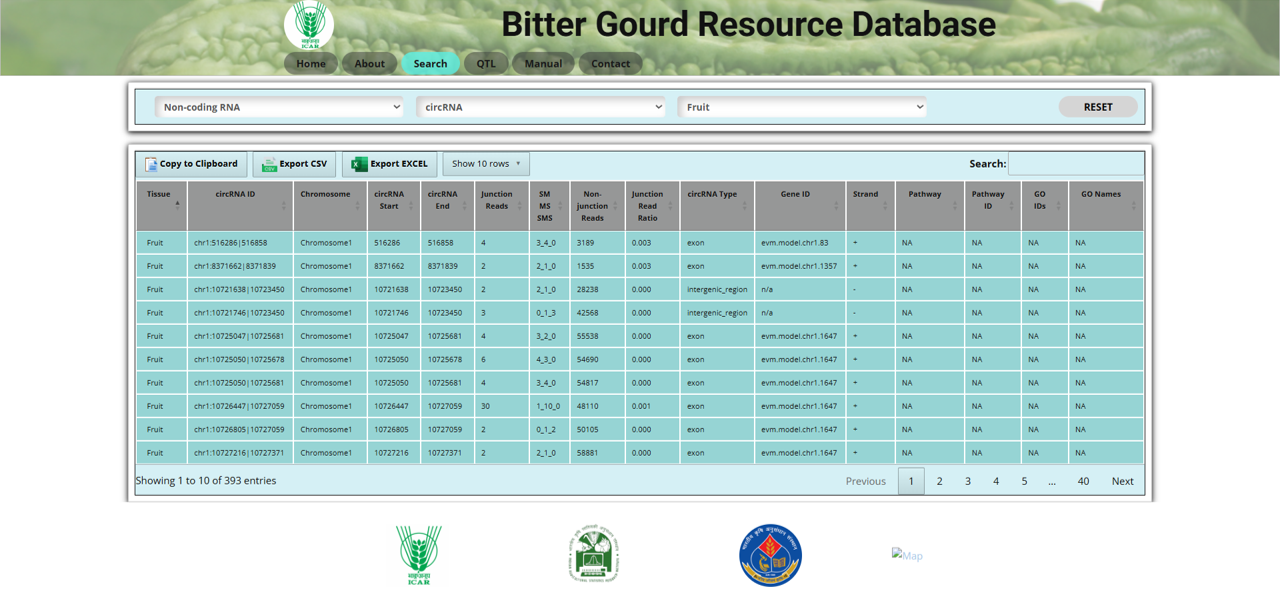
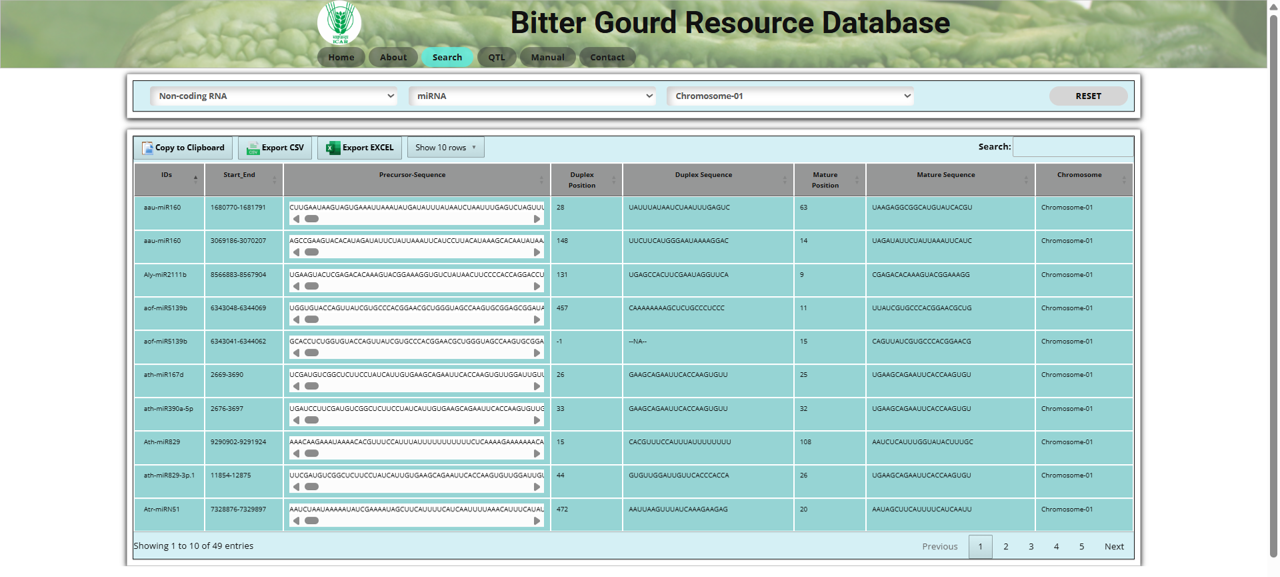
The Non-coding RNA section allows users to explore different types of non-coding RNAs in bitter gourd (Momordica charantia L.), which play crucial roles in gene regulation and cellular processes. The section includes three options:

  • circRNA
  • miRNA
  • lncRNA

circRNA Section

In the circRNA section, users can:

  1. Select Tissue Type: Choose a specific tissue type from the dropdown menu to filter circRNA data.
  2. View Results: The table displays circRNA data, including details like Name, doGMM_ID, Overmeasure, and Function Scale.
  3. Export Data: Options to copy to clipboard or export data for further analysis.

Fig.8 circRNA section of the Bitter Gourd Resource Database
circRNA Section

miRNA Section

The miRNA section in the Non-coding RNA search tool allows users to explore microRNAs (miRNAs) in bitter gourd (Momordica charantia L.). miRNAs are small non-coding RNAs that play a crucial role in gene regulation.

In the miRNA section, users can:

  1. Select Chromosome: Users can choose a specific chromosome or scaffold from the dropdown menu to filter miRNA data.
  2. View Results: The table displays miRNA data, including details such as Name, doGMM_ID, Overmeasure, and Function Scale.
  3. Export Data: Options to copy to clipboard or export data for further analysis.

lncRNA Section

The lncRNA section in the Non-coding RNA search tool allows users to explore long non-coding RNAs (lncRNAs) in bitter gourd (Momordica charantia L.). lncRNAs are involved in various regulatory processes within the cell.

In the lncRNA section, users can:

  1. Select Tissue: Users can choose a specific tissue type from the dropdown menu to filter lncRNA data.
  2. View Results: The table displays lncRNA data, including details such as Name, doGMM_ID, Overmeasure, and Function Scale.
  3. Export Data: Options to copy to clipboard or export data for further analysis.

Fig.9 lncRNA section of the Bitter Gourd Resource Database
lncRNA Section

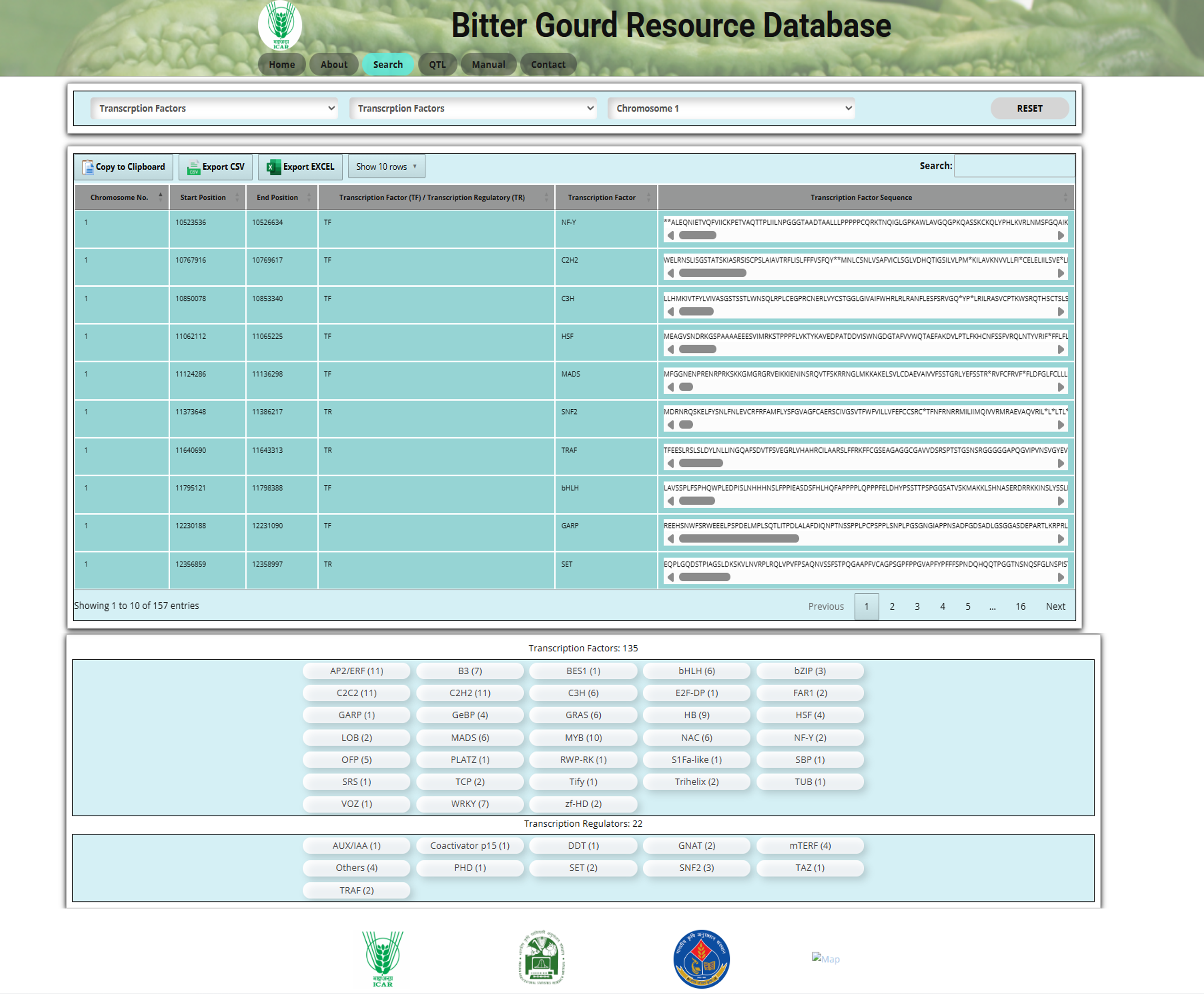
The Transcription Factors section in the Search tool allows users to explore transcription factors in bitter gourd (Momordica charantia L.). Transcription factors are proteins that regulate gene expression by binding to specific DNA sequences.

Features of the Transcription Factors Section

  1. Select Chromosome: Users can choose a specific chromosome or scaffold from the dropdown menu to filter transcription factor data.
  2. View Results: The table displays transcription factor data, including details such as Name, doGMM_ID, Overmeasure, and Function Scale.
  3. Export Data: Options to copy to clipboard or export data for further analysis.

Fig.10 Transcription factor section of the Bitter Gourd Resource Database
Transcription Factors Section

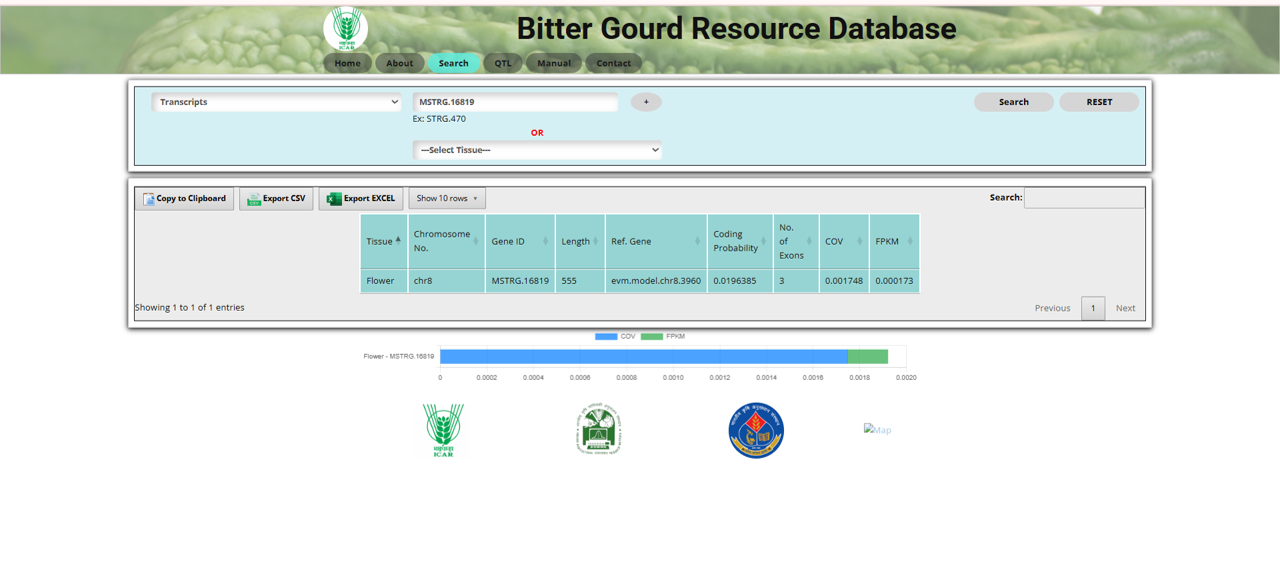
The Transcripts section in the Search tool allows users to explore transcript data in bitter gourd (Momordica charantia L.). Transcripts represent the RNA molecules produced from the transcription of DNA and are crucial for understanding gene expression.

Features of the Transcripts Section

  1. Gene ID: Users can enter a specific gene ID (e.g., 5TBG.470) to search for related transcripts.
  2. Select Tissues: Choose from a list of predefined timers or gene IDs to filter transcript data.
  3. View Results: The table displays transcript data, including details such as Gene ID, Transcript ID, and functional annotations.
  4. Export Data: Options to copy to clipboard or export data for further analysis.

Fig.11 Transcript section of the Bitter Gourd Resource Database

Transcript Section

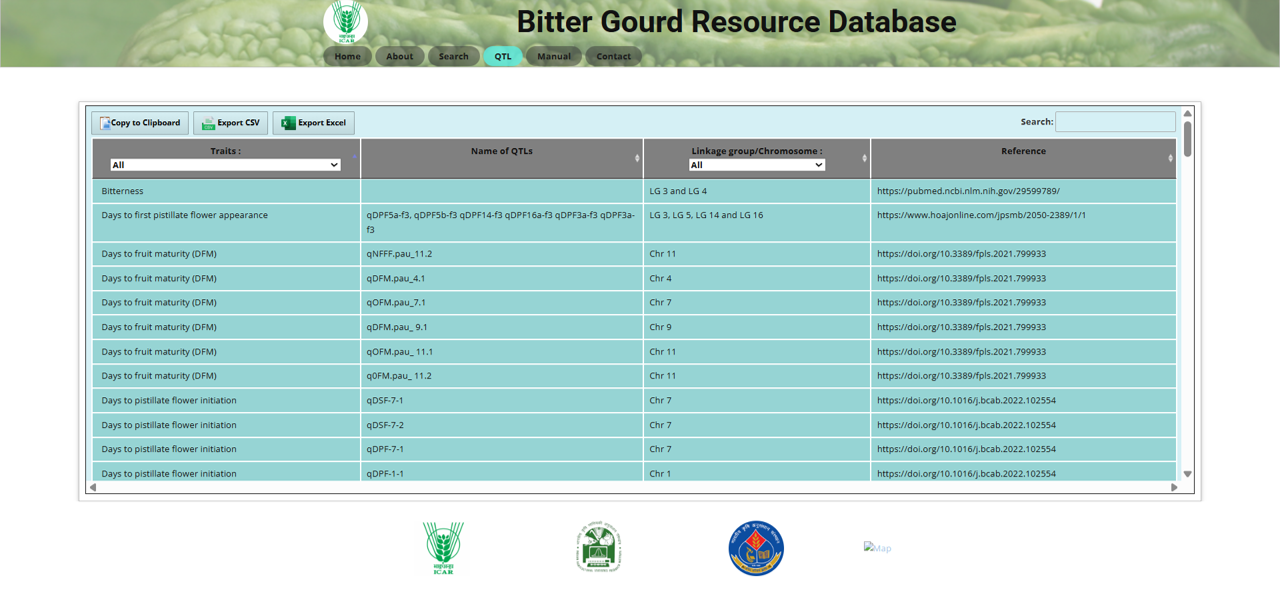
The QTL (Quantitative Trait Loci) section allows users to explore genetic loci associated with traits in bitter gourd. Key features include:

  1. Trait Selection: Choose traits like bitterness, days to fruit maturity, and flower initiation.
  2. QTL Names: View identified QTLs such as qDPF3a-f3, qDPM_pau_4.1, and qDSF-7.1.
  3. Linkage Group/Chromosome: Filter QTLs by specific linkage groups or chromosomes.
  4. References: Access links to relevant research articles.

Fig.13 QTL section of the Bitter Gourd Resource Database

QTL Section

The Contact page provides information for reaching out to the team behind the Bitter Gourd Resource Database.

Fig.14 Contact section of the Bitter Gourd Resource Database
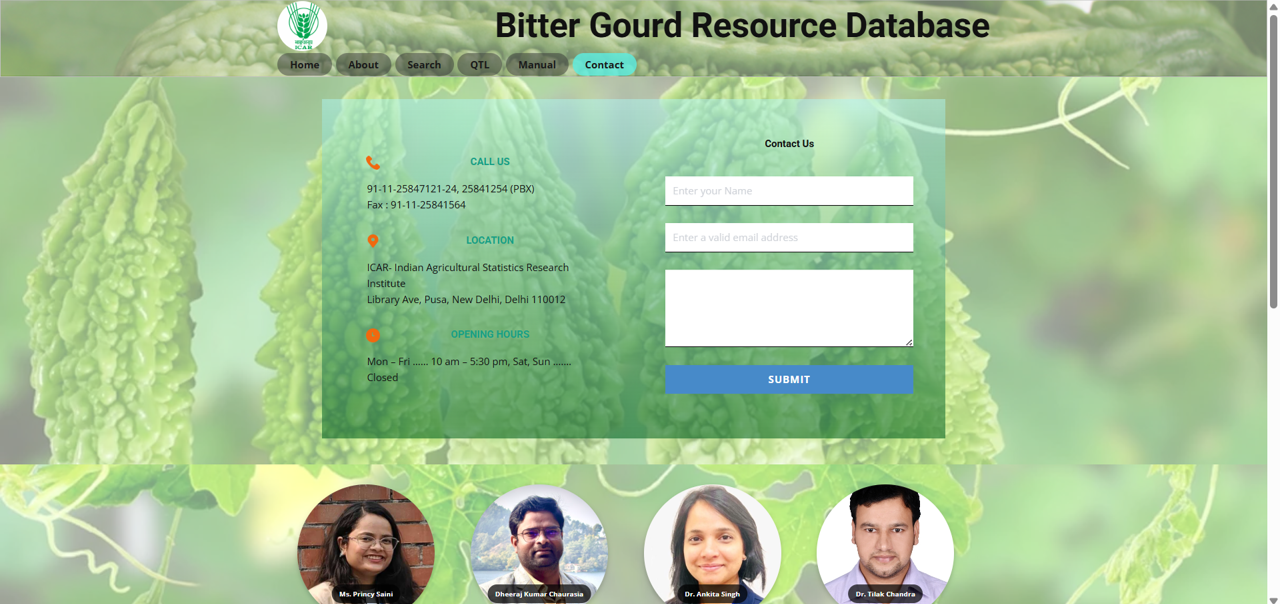
Contact Section
Codes Availability here